Safari photography is about more than just having the right gear — it's about patience, anticipation, and understanding animal behavior. These tips will help you capture stunning images of Africa's wildlife.
1. Bring the Right Gear
A DSLR or mirrorless camera with a telephoto lens (200-400mm minimum) is essential for wildlife. A 70-200mm lens is versatile for larger animals and landscapes. Don't forget extra batteries, memory cards, and a lens cleaning kit — dust is everywhere on safari.
2. Shoot in Golden Hours
The first and last hours of daylight provide the most beautiful, soft, warm light. Animals are also most active during these cooler hours. Midday sun creates harsh shadows — use this time to rest or review your photos.
3. Use a Bean Bag, Not a Tripod
Most safari vehicles don't have space for tripods. A bean bag placed on the vehicle roof or window frame provides excellent stability. Many lodges and tour operators provide these, but bring your own to be safe.
4. Focus on the Eyes
Sharp eyes make wildlife photos come alive. Use single-point autofocus and place the focus point directly on the animal's eye. If the eye isn't sharp, the photo won't work regardless of composition.
5. Get Low
Shooting at eye level (or lower) with your subject creates intimacy and connection. If you're in a vehicle, try to position yourself as low as possible. The best wildlife photos make you feel like you're in the animal's world.
6. Use Shutter Priority Mode
For wildlife, shutter speed is critical. Use at least 1/500s for stationary animals and 1/1000s or faster for moving animals. Birds in flight may require 1/2000s or higher.
7. Tell a Story
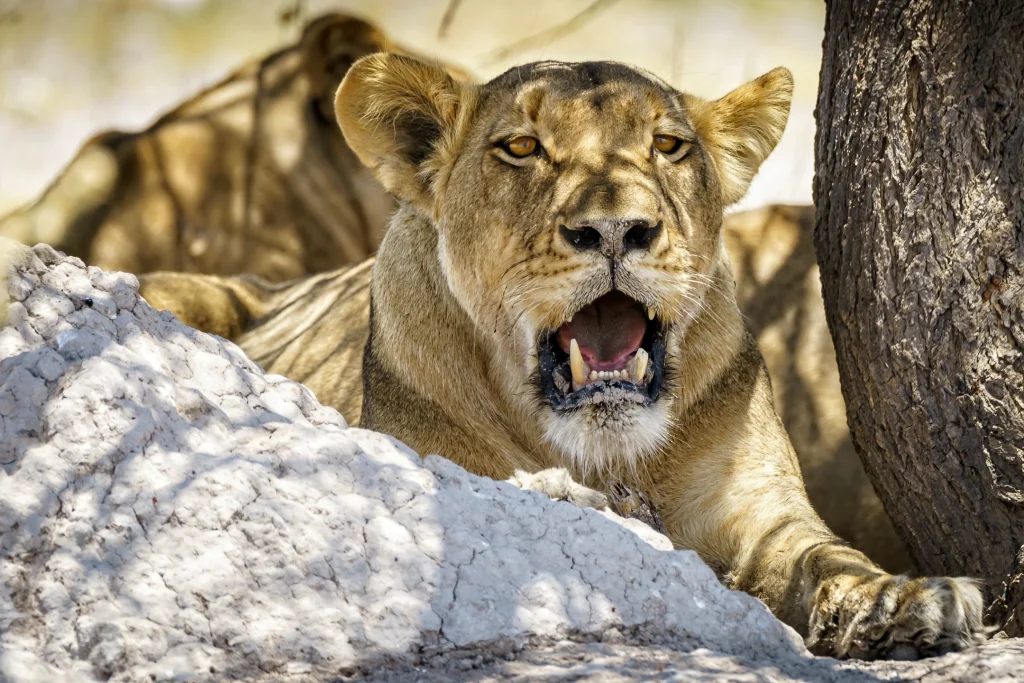
Don't just take portraits. Capture behavior, interactions, and the animal within its environment. A lion yawning, elephants playing, or a bird building a nest tells a more compelling story than a simple portrait.
8. Be Patient
The best wildlife photos come to those who wait. Spend time observing your subject. Anticipate behavior. A lion might wake up, stretch, and roar — but only if you're patient enough to wait.
9. Shoot in RAW
RAW files capture more data than JPEGs, giving you greater flexibility in post-processing. You can recover highlights, lift shadows, and adjust white balance without degrading image quality.
10. Don't Forget the Landscape
Africa's landscapes are breathtaking. Include the environment in your wildlife photos to give context. A lone acacia tree on the savanna at sunset or the endless Serengeti plains are as memorable as the animals themselves.